
Why Is Spin Training So Important?
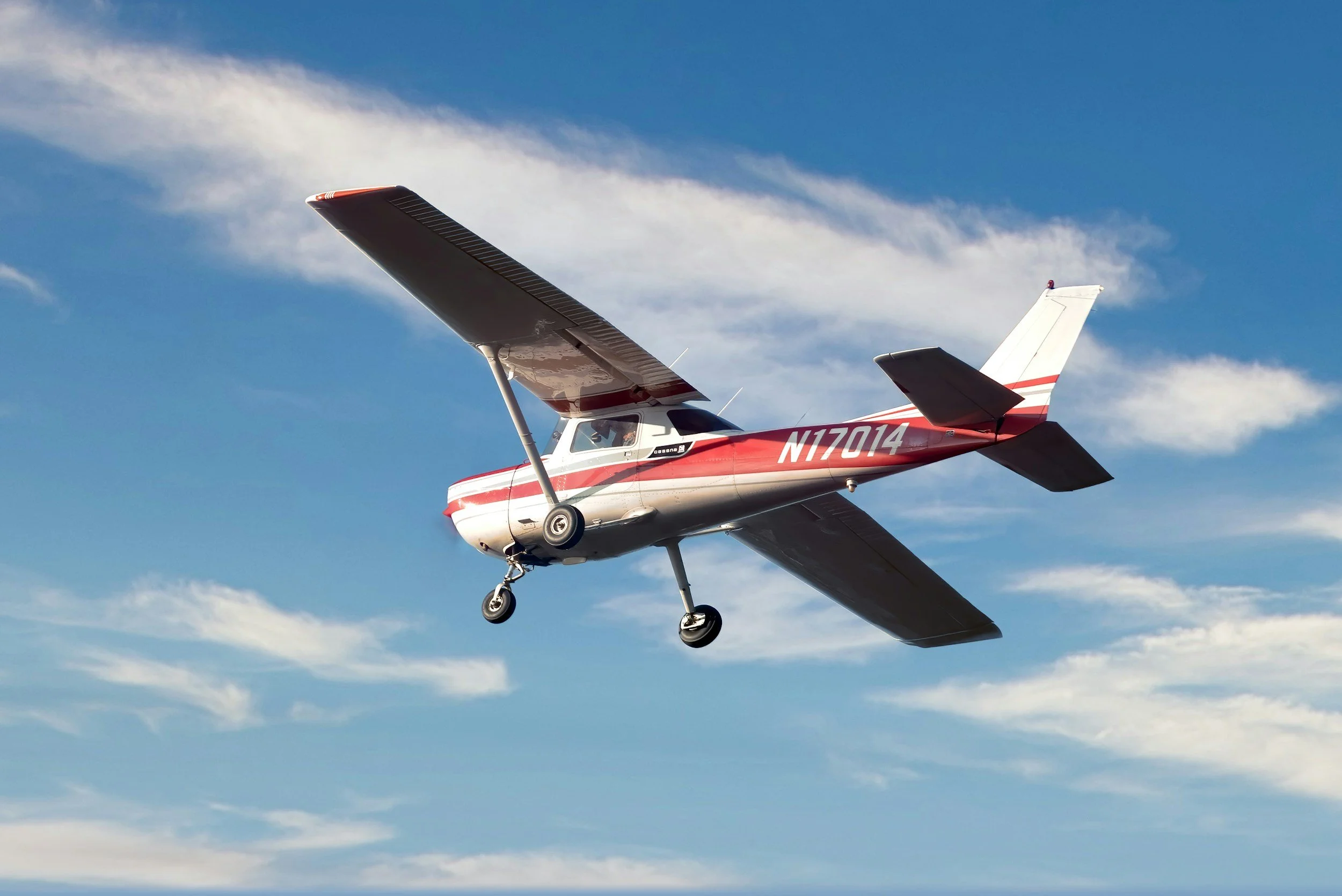
Most pilots will never intentionally spin an airplane. But that's exactly the problem.
A spin doesn't announce itself. It doesn't give you a warning or wait until you're ready. It tends to happen in the worst possible place, when you’re low to the ground, slow, distracted, and it can be over before you've had time to process what went wrong. That's why spin training isn't just a box to check. It's one of the most genuinely important things a pilot can do to protect themselves, their passengers, and their future in aviation.
The Numbers Tell a Hard Story
Stall/spin accidents are one of general aviation's most persistent and deadly problems. According to AOPA's Air Safety Institute, stalls were implicated in nearly 24 percent of all fatal general aviation accidents over a 15-year study period, a disproportionate share compared to other accident types. A separate analysis of over 2,000 stall-related accidents found that stall-type accidents are more than twice as fatal as the average general aviation accident.
These aren't freak occurrences. They happen to experienced pilots and beginners alike, in good weather, in familiar aircraft, on routine flights. The common thread isn't bad luck; it's a lack of preparation.
Where It Happens & Why It's So Dangerous
The most deadly place to encounter a stall/spin isn't in cruise flight at altitude. It's in the traffic pattern, specifically during the base-to-final turn.
Here's why: a pilot overshoots the centerline on final, instinctively banks harder to correct, and adds back pressure without adding rudder. The aircraft is now slow, low, uncoordinated, and turning. That combination (a cross-controlled stall close to the ground) almost always leads to an incipient spin. And at pattern altitude, there's simply no room to recover. The ground arrives first.
The NTSB (National Transportation Safety Board) has specifically highlighted this scenario in its safety alerts, noting that almost all stall accidents are preventable, and that many occur when pilots are momentarily distracted during the traffic pattern. Understanding how a spin develops (the angle of bank, the skidding rudder, the stalled wing) allows a pilot to recognize the situation before it becomes unrecoverable.
The Difference Between Awareness and Experience
The FAA requires stall awareness training for all private pilot applicants, but actual spin training (entry, full spin, and recovery) is only required for flight instructor candidates. That gap matters.
There's a significant difference between reading about spins and experiencing them. A pilot who has only read about spins knows what they are. A pilot who has trained in them knows what they feel like, ie, the rotation, the disorientation, and the counterintuitive recovery inputs. That felt knowledge is what holds up under pressure.
As Meade Aviation Services notes on its website, stalls and spins during the landing pattern remain among the biggest threats to pilot safety. The goal of spin training isn't just to teach recovery; it's to train pilots to recognize both the situations and the event itself, before things get critical.
Recovery Isn't the Only Goal
Many pilots assume spin training is about learning to get out of a spin. That's part of it. But the deeper value is in recognition and prevention.
By actually experiencing the conditions that lead to a spin, the deteriorating coordination, the buffet, the yaw, pilots develop a visceral awareness that's hard to get any other way. You learn what it feels like when the airplane is about to depart controlled flight. And you learn that the recovery, when done correctly, is reliable: full opposite rudder, then forward pressure to break the stall, then pull out of the resulting dive. It works, but only if you know it, trust it, and can execute it when you're disoriented and close to the ground.
The Aircraft Matters Too
Spin training needs to be done in an aircraft that is certified for spins. Not all aircraft are. This is something the FAA (Federal Aviation Administration) is explicit about in Advisory Circular AC 61-67C: spin training must be conducted in an aircraft approved for the maneuver.
The Citabria 7ECA that Lance Meade uses at Meade Aviation Services is exactly that kind of aircraft: aerobatically capable, honest in its handling, and well-suited for spin training in a controlled, progressive environment. It's the kind of airplane where you can learn the maneuver properly, not just survive it.
A Skill That Stays With You
Spin training is one of those experiences that fundamentally changes how you think in the cockpit. Pilots who've been through it tend to fly their traffic patterns more carefully, stay more attuned to coordination, and carry a calm confidence that comes from having been to the edge and knowing what to do there.
It doesn't take long. It doesn't have to be dramatic. But it does require getting in an appropriate aircraft with an experienced instructor and actually doing it, not just reading about it, watching a video, or hoping it never comes up.
At Meade Aviation Services, spin training is taught by Lance Meade, a pilot with over 50 years of experience, including 35 years with United Airlines. His approach is the same as everything else he teaches: calm, practical, and built around making you a genuinely better and safer pilot.
If you've never done spin training, there's no better time. And if you have, it might be worth revisiting. The pattern is always there. The risks don't go away. But with the right training, neither does your ability to handle them.
Contact Meade Aviation Services to schedule your spin training today.
Sources:
AOPA Air Safety Institute – Keep the Wings Flying: Stall and Spin Accidents
NTSB Safety Alert SA-019 – Prevent Aerodynamic Stalls at Low Altitude
FAA Advisory Circular AC 61-67C – Stall and Spin Awareness Training
Boldmethod – How to Prevent Disaster on Your Base-to-Final Turn
An Analysis of Fixed-Wing Stall-Type Accidents in the United States – MDPI Aerospace
